
How to tell whether an older house is worth buying
Make an informed decision concerning a house before you spend thousands.
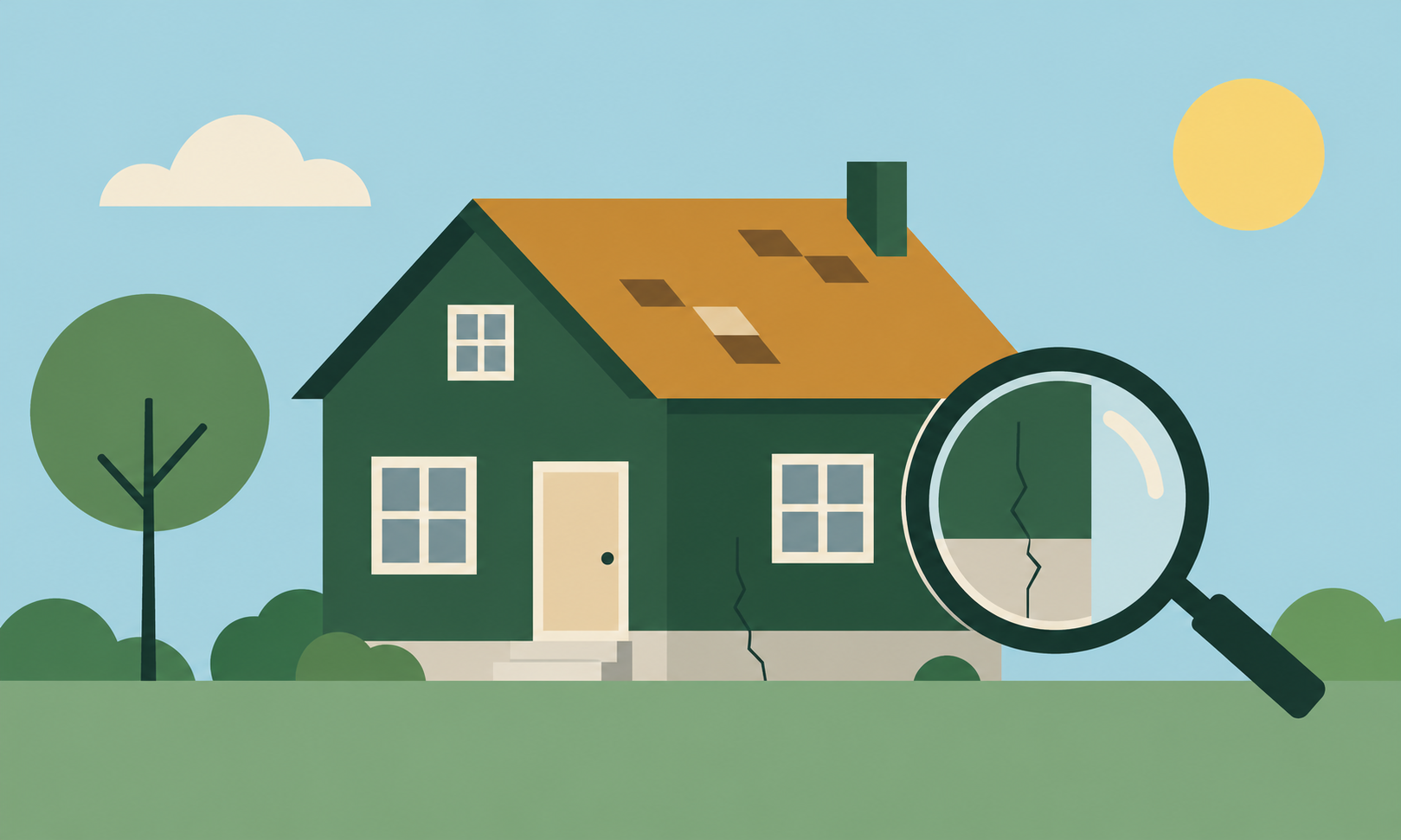
An older house has something a new development often struggles to reproduce: character.
Maybe it's the high ceilings, the solid timber doors, the mature trees outside or the way the afternoon sunlight falls across the living room. Perhaps it's simply in a better location than anything you could afford to buy new.
Then you notice a crack near the window. The roof looks tired. The electrical panel hasn't been updated in decades.
Suddenly, that charming house starts looking like a very expensive project.
Buying an older home isn't necessarily a mistake. Some older houses have been carefully maintained, thoughtfully renovated and built with materials that continue to perform well. Others have years of neglected repairs hidden beneath fresh paint.
The important question isn't whether the house is old. It's whether its condition, price and future maintenance needs make sense for you.
Here's how to look beyond the charm, recognize expensive warning signs and decide whether an older property is worth buying.
Key rule: Don't compare an older home's asking price with a newer home's price alone. Compare the full cost of buying, repairing, maintaining and living in each property.
Age doesn't automatically mean poor quality
A house built fifty years ago isn't necessarily worse than one built five years ago.
Construction quality varies by location, materials, design, workmanship and maintenance.
Some older homes have durable structures and well-maintained systems. Some newer homes develop serious defects because of poor workmanship or design.
Age matters because building components have finite service lives.
Roofs eventually need replacement. Plumbing deteriorates. Electrical systems may no longer meet household needs. Windows and insulation may perform poorly compared with modern alternatives.
But a fifty-year-old home with a recently replaced roof, updated wiring and carefully maintained plumbing may present fewer immediate repair needs than a twenty-year-old property that has been neglected.
Don't judge a home simply by its construction date.
Judge what is actually there.
1. Start with the structure, not the decoration
Fresh paint, attractive furniture and carefully arranged lighting can make almost any house look appealing.
But decoration tells you very little about structural condition.
Start by looking at the building itself.
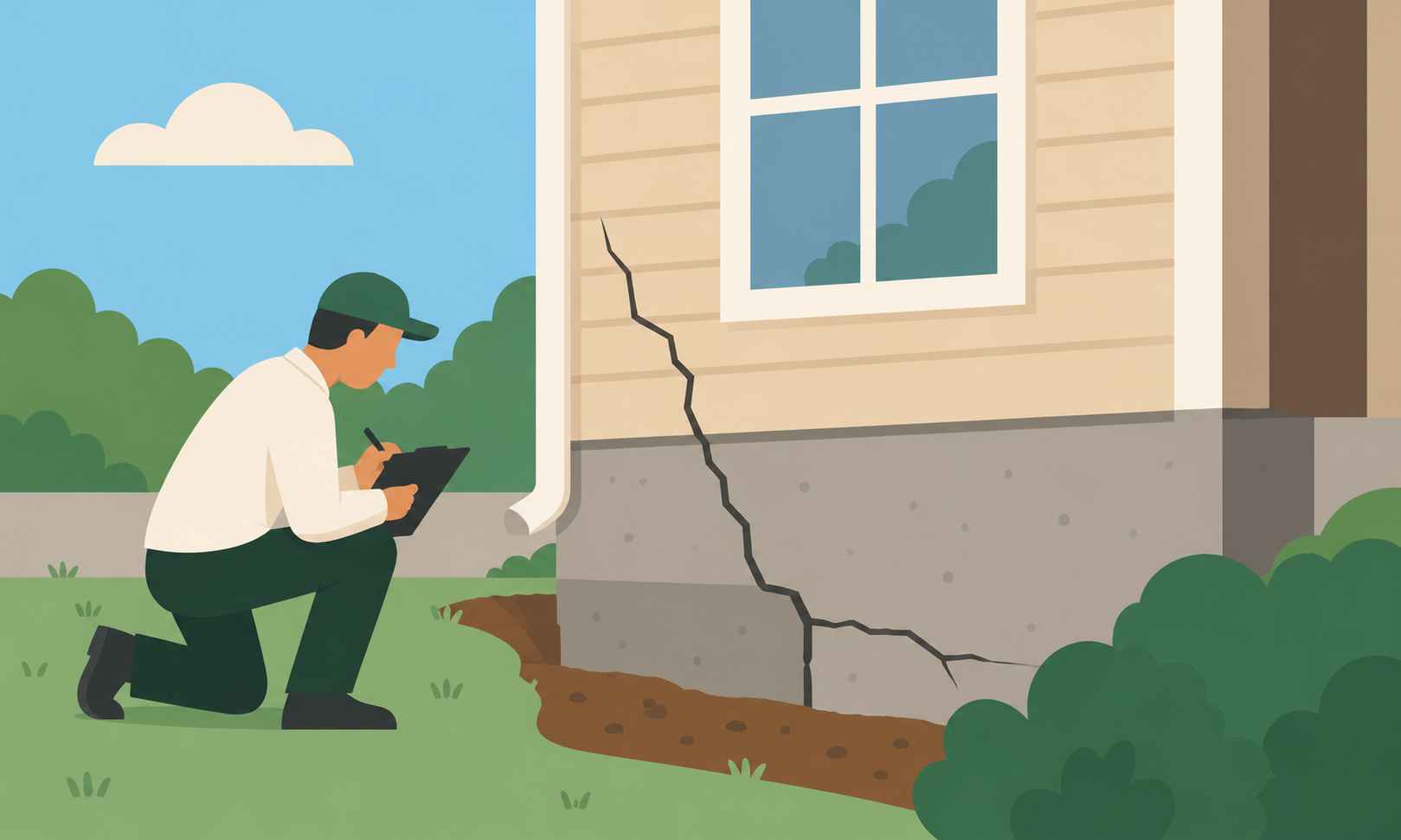
Check for unusual cracks
Small cracks in plaster or paint can occur through ordinary movement and material changes.
More concerning signs may include:
Large diagonal or stair-step cracks.
Cracks that appear to be widening.
Bulging or leaning walls.
Uneven or noticeably sloping floors.
Doors and windows that no longer align.
Significant separations around structural elements.
These symptoms don't automatically prove foundation failure, but they deserve investigation.
An independent structural engineer may be needed when an inspection raises concerns.
Look for signs of previous repairs
Check whether cracks have been filled or covered.
New paint in one isolated area isn't necessarily suspicious, but it's reasonable to ask why the work was done.
Request records of major structural repairs and any available engineering reports.
Understand the foundation
Older homes may use different foundation systems depending on local construction practices and soil conditions.
Possible concerns include settlement, moisture damage, deteriorated supports and poorly managed drainage.
A standard visual inspection can identify warning signs, but it cannot reveal every hidden structural defect.
Tip: A house doesn't have to be perfectly level or free of every crack. What matters is whether the movement is understood, stable and compatible with safe long-term use.
2. Find out how old the roof really is
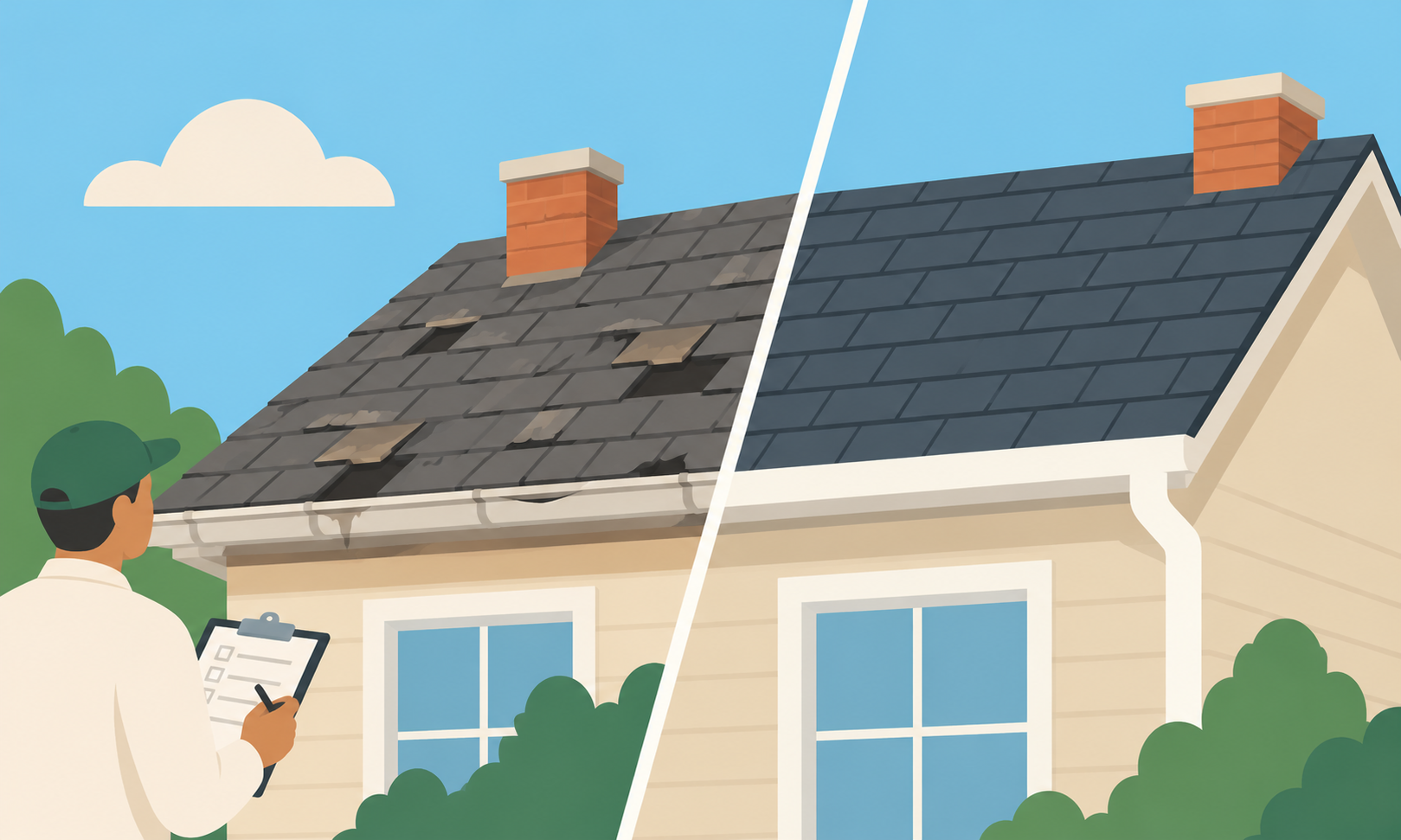
A roof can look acceptable from the street while approaching the end of its useful life.
Roof replacement can be one of the largest expenses associated with buying an older home.
Ask when the roof covering was installed and whether any major repairs have been completed.
Don't rely entirely on the seller's estimate.
Look for documentation where possible.
Warning signs
Missing, damaged or displaced roof coverings.
Sagging roof sections.
Damaged flashing.
Water stains near upper ceilings.
Damp insulation in accessible roof spaces.
Repeated leak repairs.
Poorly maintained gutters.
The expected life of a roof depends on its material, installation, climate, exposure and maintenance.
There is no universal rule that every roof must be replaced after a specific number of years.
What should you do?
Have the roof assessed by an appropriately qualified inspector or roofing specialist.
Ask whether it needs immediate repair, substantial maintenance or eventual replacement.
If replacement is likely within a few years, include that cost in your purchase calculations.
A lower asking price may not be attractive if a major roof expense is approaching.
3. Don't overlook old electrical wiring
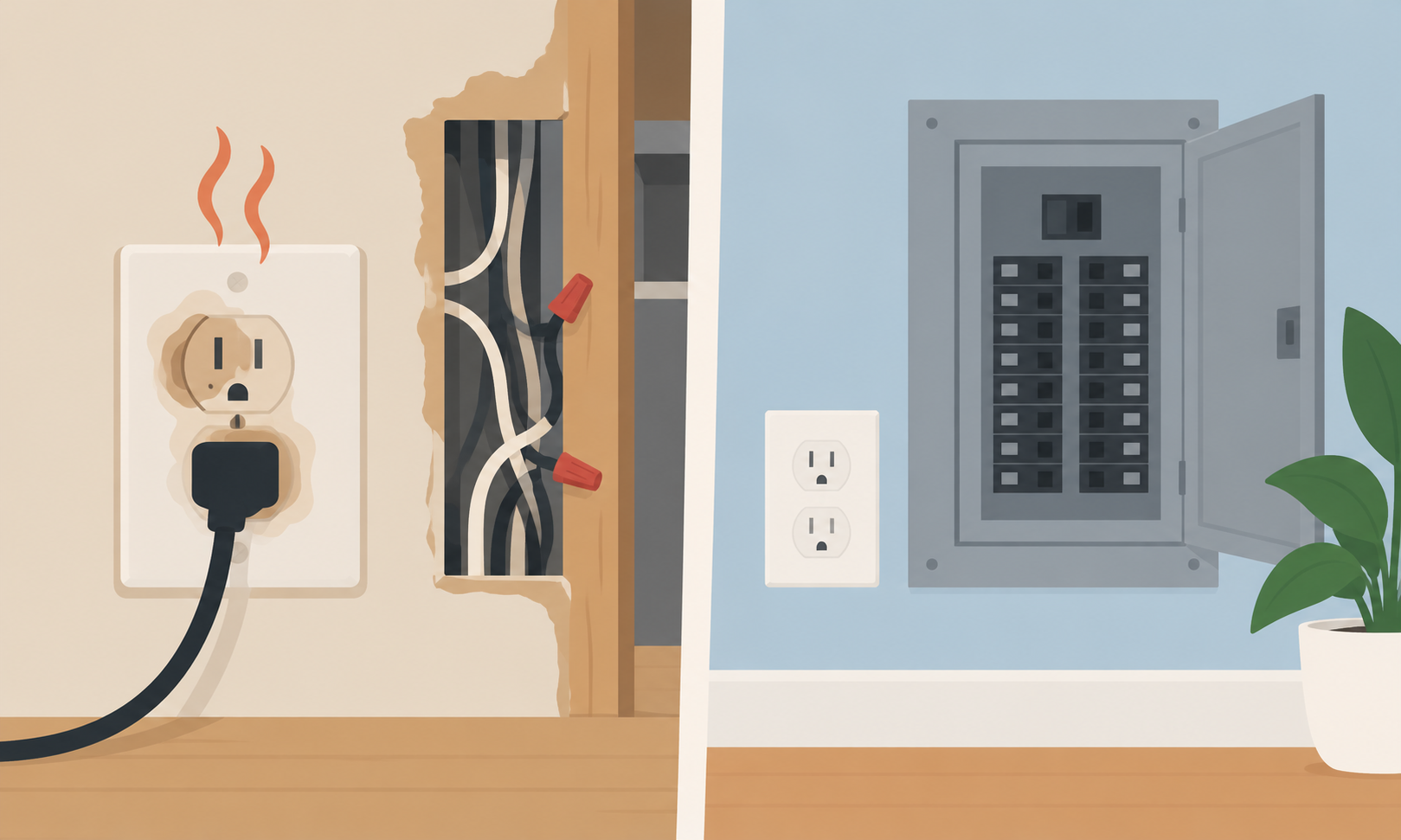
Electrical systems are especially important in older properties.
A house may have been designed for a time when households used far fewer appliances and electrical devices.
Over the years, additional outlets, circuits and equipment may have been installed.
Some work may have been completed professionally. Other changes may have been made without appropriate planning.
Warning signs
Repeatedly tripping breakers.
Discoloured outlets.
Damaged or exposed wiring.
Unusual buzzing.
Burning smells.
An outdated or deteriorated electrical panel.
Extensive use of extension leads because outlets are insufficient.
Inconsistent or visibly makeshift electrical modifications.
Not every older wiring system is automatically unsafe.
However, its condition, suitability and compliance with applicable requirements need to be assessed.
What to ask
Find out when the electrical installation was last inspected or substantially updated.
Request available certificates and documentation.
If the system appears outdated or problematic, arrange an inspection by a qualified electrician.
Ask whether the home can safely support your expected appliances, heating systems and other electrical loads.
Don't assume that replacing the visible outlets means the entire wiring system has been modernized.
4. Check the plumbing before it becomes your problem
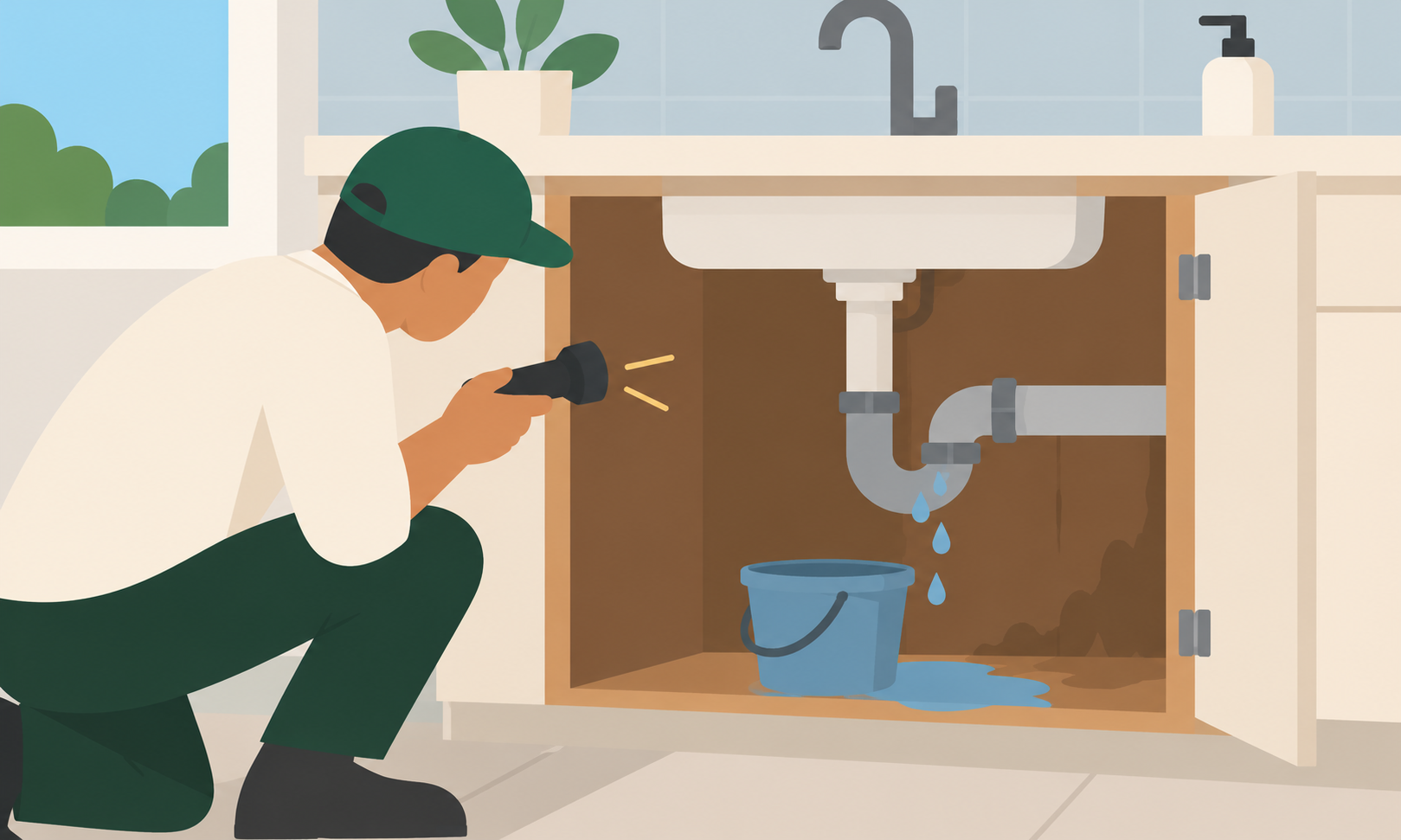
Old plumbing can be difficult to evaluate because much of it is hidden inside walls, floors and underground.
Pipe condition depends on material, water chemistry, installation quality and maintenance.
Some older systems continue working reliably.
Others develop corrosion, restricted flow, leaks or drainage problems.
What to check during a viewing
Where permitted, run taps and showers.
Observe:
Water pressure.
Water flow.
Drainage speed.
Unusual noises.
Discolouration.
Visible leaks beneath sinks.
Signs of previous water damage.
Check around toilets, baths, showers and water heaters.
Ask whether major supply and drainage pipes have been replaced.
Look beyond the visible fixtures
A newly installed sink doesn't prove the pipes behind it are new.
Modern bathroom tiles don't mean the drainage or waterproofing has been replaced.
For older properties, a specialist plumbing inspection may be worthwhile.
Depending on the property, this might include examining accessible pipework or conducting a drain-camera survey.
Consider water quality
In some locations, older plumbing may contain lead components or other materials requiring assessment.
Ask local water authorities or qualified professionals about appropriate testing and replacement guidance.
Avoid assuming clear-looking water is proof that the plumbing system is safe.
5. Damp and mould can reveal expensive problems
An older house may have experienced decades of rain, temperature changes and ground moisture.
Dampness isn't automatically a reason to reject a property.
But you need to understand its cause.
Look for these signs
Musty odours.
Peeling or bubbling paint.
Dark stains on walls.
Persistent window condensation.
Mould behind furniture.
Water marks near ceilings.
Damp areas around foundations.
Damaged flooring.
Possible causes include leaks, poor drainage, condensation, inadequate ventilation and defects in the building envelope.
Different causes require different repairs.
Beware of cosmetic treatments
Fresh paint may hide staining temporarily.
Waterproof coatings and damp-treatment products may conceal symptoms without correcting the original moisture source.
Ask what caused any previous damp problem and what work was done to resolve it.
An independent moisture assessment can be useful when the source is uncertain.
Don't buy a persistent damp problem based only on the promise that it needs a coat of paint.
6. Understand the insulation and energy costs
Many older homes were built before modern expectations for energy efficiency became common.
Depending on the climate and building, they may have:
Limited roof insulation.
Poorly insulated external walls.
Older windows.
Air leakage around doors and openings.
Inefficient heating equipment.
Inadequate ventilation.
Uninsulated hot-water pipes.
These issues can increase the cost of heating and cooling.
But not every older home is inefficient.
Some have already received substantial energy upgrades.
Others have design features that help maintain comfortable temperatures naturally.
Check the actual performance
Ask for recent utility bills where available.
Consider whether the home has a valid energy performance certificate or similar assessment.
Look at the condition of windows, insulation and heating equipment.
Remember that previous occupants' energy bills also reflect their habits and household size.
Plan upgrades carefully
Insulation, airtightness and ventilation need to work together.
Sealing a building without considering fresh air and moisture control can create problems.
Older or historic buildings may require specialized materials and techniques.
Before budgeting for extensive energy renovations, obtain advice appropriate to the building's construction.
7. Be careful with older renovations
A renovated older house can be an excellent purchase.
But you need to know what was actually renovated.
There's a big difference between replacing kitchen cabinet doors and replacing an entire plumbing system.
Similarly, a newly painted room may look modern even though its electrical wiring hasn't changed.
Ask for renovation records
Request information about:
Major structural changes.
Roof replacements.
Electrical upgrades.
Plumbing replacements.
Extensions and additional rooms.
Bathroom waterproofing.
Window replacements.
Insulation improvements.
Heating and cooling installations.
Where applicable, ask for permits, approvals, inspection certificates and contractor invoices.
Check whether extensions are legal
Some older houses have been extended or altered multiple times.
An extension may look perfectly integrated while lacking required approvals.
Depending on local law, unauthorized work can affect financing, insurance, resale or future renovation plans.
Check property records and consult the relevant local authority when necessary.
Don't assume that work is legally approved simply because it has existed for many years.
8. Think about hazardous older materials
Certain older building materials and finishes can present health risks when disturbed.
The specific concerns depend on the country's construction history, the age of the property and materials used.
Potential issues may include:
Asbestos-containing insulation, roofing, flooring or other products.
Lead-based paint.
Lead plumbing components.
Hazardous electrical materials.
Contaminated building materials.
Hidden mould following previous water damage.
Not every older home contains these hazards.
But age and renovation history can justify further investigation.
Don't disturb suspicious materials
Some materials are relatively low-risk when intact and undisturbed but can become hazardous during removal or renovation.
For example, disturbing asbestos-containing materials can release dangerous fibres.
Lead-based paint dust can be particularly harmful to children.
If you suspect hazardous materials, have them assessed by appropriately qualified professionals before undertaking work.
Check local requirements
Regulations for inspection, disclosure, removal and disposal vary significantly between countries.
In the United States, for example, many pre-1978 homes are subject to specific lead-based paint disclosure rules when sold, with important exceptions.
Follow the rules that apply to the property's location.
9. Look outside the house
A property is more than the building.
The surrounding land can create expensive problems, particularly when water drainage or ground conditions are poor.
Check the drainage
Look for:
Water collecting near the foundation.
Damaged or overflowing gutters.
Downpipes discharging against walls.
Poorly graded ground.
Blocked drains.
Persistent erosion.
Ask whether the property has experienced flooding or drainage problems.
Consider trees
Mature trees can be a major advantage.
They provide shade, privacy and character.
But large or unhealthy trees close to buildings may require professional assessment.
Don't automatically assume that every tree near a house is dangerous.
Instead, check for visible hazards and get professional advice when needed.
Inspect external structures
Garages, sheds, retaining walls, decks, fences and outbuildings also need maintenance.
A deteriorating retaining wall or unsafe balcony may be more consequential than an outdated kitchen.
Include these features in your inspection and repair budget.
10. Understand the neighborhood before buying
A beautiful house in the wrong location can still be a poor purchase.
Location affects daily convenience, resale demand and long-term satisfaction.
Older homes are sometimes located in established neighborhoods with mature landscaping, transport connections and established services.
That can be a significant advantage.
But conditions vary.
Visit more than once
If possible, visit at different times.
Consider:
Traffic and noise.
Street lighting.
Parking.
Public transport.
Nearby amenities.
Road conditions.
Drainage after rain.
Planned developments.
Access to essential services.
Investigate environmental risks
Depending on the location, relevant risks may include floods, earthquakes, wildfires, landslides, severe storms or coastal erosion.
Consult official hazard maps and relevant local authorities.
A property may be affordable partly because it is exposed to risks that raise insurance or maintenance costs.
Find out what insurance is available and what it costs before committing.
11. Calculate the real cost of buying
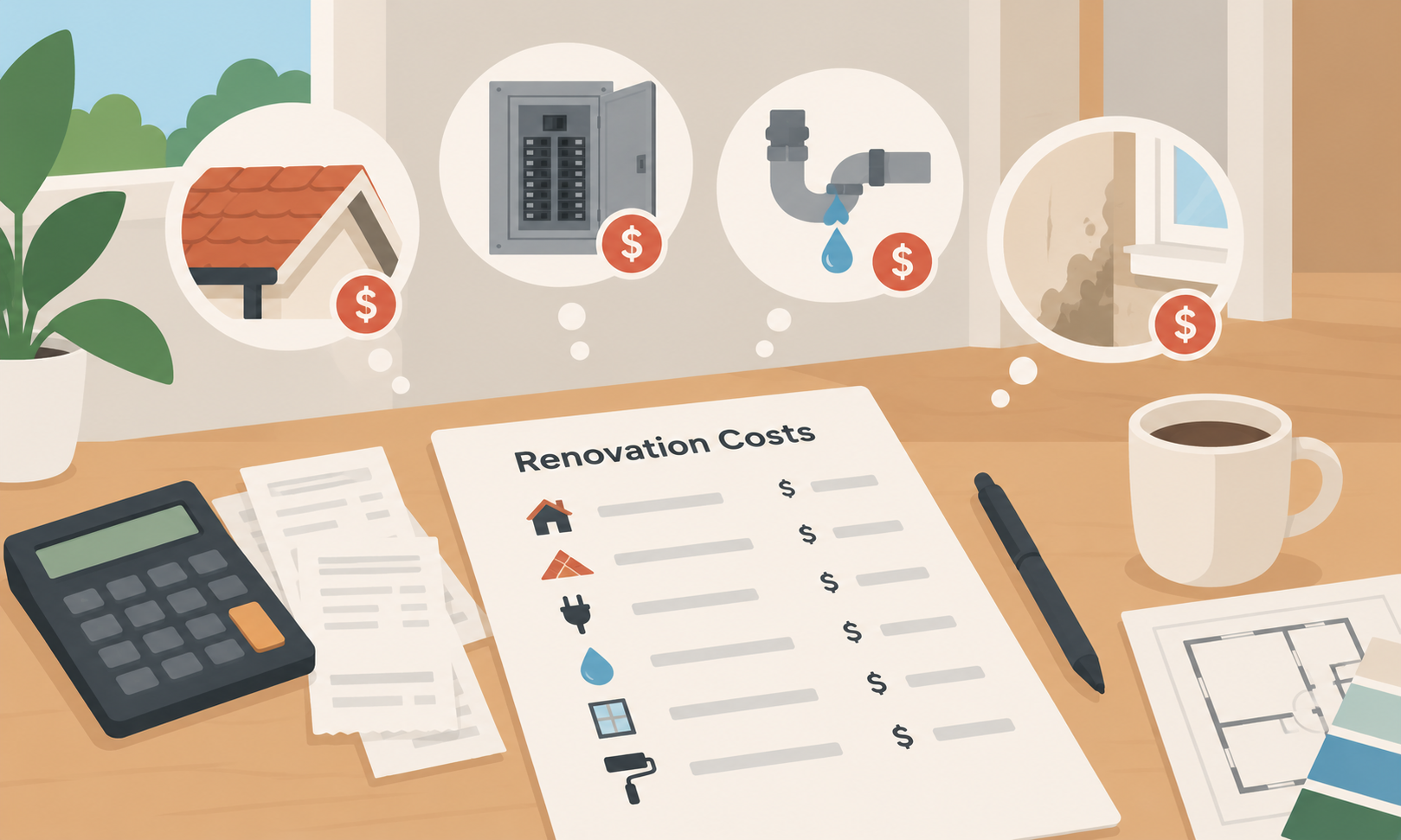
The asking price is only part of the investment.
An older home may need work immediately, within the first few years or gradually over time.
Before making a final decision, build a realistic budget.
Purchase costs
Include:
Agreed purchase price.
Applicable taxes and transfer fees.
Legal or conveyancing expenses.
Survey and inspection costs.
Mortgage-related costs, where applicable.
Moving expenses.
Immediate repairs
These are the problems that must be addressed to make the property safe, functional and protected from damage.
Examples include serious leaks, unsafe wiring, failed essential systems and structural repairs.
Near-term replacements
Some components may still work but be approaching the end of their useful life.
Examples include a deteriorating roof, aging heating equipment or badly worn windows.
Optional improvements
These are things you would like to change but don't necessarily need to repair immediately.
Examples include:
Kitchen modernization.
Decorative flooring.
Interior painting.
Landscaping.
Cosmetic bathroom upgrades.
Keep optional improvements separate from essential repairs.
It's easy to spend too much on attractive finishes while overlooking expensive hidden systems.
12. Get realistic repair estimates
A seller might describe a problem as a small repair.
That doesn't make it small.
A leaking roof may need only localized flashing work, or it may require extensive replacement.
A cracked wall might need a simple cosmetic repair or further structural investigation.
The cost depends on the actual cause.
Ask professionals for written estimates
For significant problems, obtain assessments from appropriately qualified contractors or specialists.
A useful estimate should describe:
What is wrong.
What work is proposed.
Which materials are included.
Whether permits are required.
Expected labour and material costs.
Possible hidden conditions.
Relevant exclusions.
Estimated completion arrangements.
One quote may be enough to understand a minor repair.
For major work, comparing several appropriate estimates can reduce uncertainty.
Include a contingency
Older houses can reveal additional issues once renovation begins.
A contingency fund helps absorb unexpected expenses.
The appropriate amount depends on the building's condition, complexity and your financial situation.
Don't assume that a fixed percentage guarantees protection against all hidden problems.
If the home's repair needs would consume all your available savings, consider whether you can reasonably manage the uncertainty.
13. Don't skip the independent home inspection
Even if you know a little about construction, a professional inspection can identify problems you might overlook.
Choose an independent inspector who is appropriately qualified for the property and location.
A general inspection may examine:
Visible structural components.
Roof and accessible attic spaces.
Exterior walls and drainage.
Plumbing systems.
Electrical components.
Heating and cooling systems.
Windows and doors.
Moisture damage.
Insulation and ventilation.
Accessible interior areas.
Understand the limits
Most general home inspections are visual and non-invasive.
An inspector usually cannot see inside every wall, beneath finished flooring or through concealed foundations.
Specialized hazards and systems may require separate investigations.
Depending on the property, consider additional structural, electrical, plumbing, pest, moisture or hazardous-material assessments.
Attend the inspection
If possible, walk through the property with the inspector.
Ask which issues are urgent, which can wait and which need specialist investigation.
Request a written report with photographs and clear recommendations.
An inspection doesn't guarantee a defect-free property.
Its purpose is to reduce uncertainty before you commit.
14. Use inspection findings when negotiating
Discovering problems doesn't necessarily mean you should abandon the purchase.
It may mean the price needs to change.
For example, if the inspection identifies substantial roof repairs, you may be able to negotiate a lower price, ask for repairs or request another arrangement permitted by the purchase contract.
Focus on significant defects
A house that has been lived in for decades will probably have cosmetic wear.
Minor marks and dated finishes aren't necessarily reasons for major price reductions.
Prioritize safety, structural condition, water intrusion, expensive equipment and essential repairs.
Protect your options
Where available, consider including inspection and financing conditions in the purchase agreement.
These may allow you to reconsider or withdraw under specified circumstances.
The exact rights depend on the contract and local law.
Have an appropriately qualified legal professional explain the terms before signing.
Don't assume you can cancel a property purchase without consequences simply because you've changed your mind.
15. Know when to walk away
Some older homes are worthwhile renovation projects.
Others carry more risk than a buyer can reasonably manage.
Consider walking away when:
Serious structural problems remain unexplained.
Major water intrusion continues without a reliable repair plan.
The seller refuses reasonable access for inspection.
Significant renovation work lacks necessary documentation.
Repair costs are too uncertain to budget responsibly.
The property cannot be insured on acceptable terms.
The price doesn't reflect known problems.
The home requires work beyond your skills, finances or available time.
You're under pressure to buy without adequate due diligence.
One problem doesn't necessarily make a house unsuitable.
But several significant problems together can make the purchase much harder to justify.
The ability to afford the purchase price is not the same as the ability to afford the property.
16. When an older house is a good buy
After all these warnings, it's worth remembering why people buy older homes.
A well-chosen older property can offer advantages that are difficult to reproduce.
Better location
Some older houses occupy established neighborhoods close to transport, shops, parks and other amenities.
Mature landscaping
Large trees and established gardens can make outdoor spaces feel more comfortable and private.
Architectural character
Original timber details, high ceilings, distinctive windows and interesting layouts can create a sense of individuality.
Renovation potential
A structurally sound but cosmetically dated home may allow you to improve the interior gradually.
More space for the budget
In some markets, an older home may offer more floor area or land than a similarly priced new property.
Existing community
Established neighborhoods may offer familiar services, local businesses and developed infrastructure.
These advantages are meaningful, but they should be considered alongside condition, maintenance and long-term costs.
17. A simple decision test
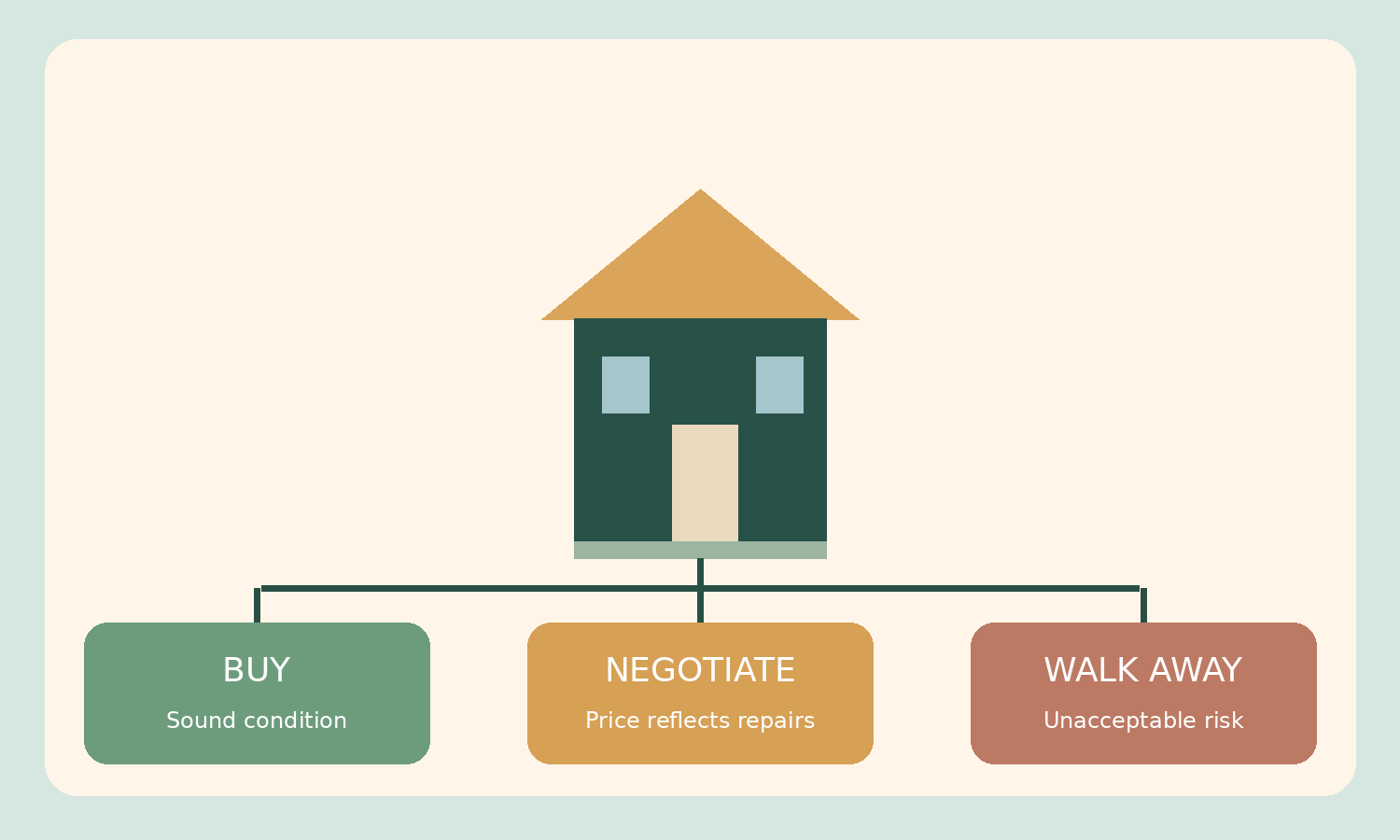
Before buying, answer five questions.
Is the structure sound?
Major movement, unresolved foundation issues and serious structural defects require careful professional assessment.
Is the home safe?
Electrical, gas, fire and other hazards should be understood before purchase.
Can you afford the essential repairs?
Include necessary work in the total purchase budget.
Do you have money left afterward?
Homeownership requires ongoing maintenance and the ability to respond to unexpected expenses.
Would you still want the house if the renovation took longer?
An older property may require more time, disruption and decision-making than expected.
If the answer to these questions is reasonably positive, the home may be worth considering.
If several answers are uncertain, investigate further before committing.
Common mistakes when buying an older house
Falling in love with the decoration. Attractive finishes can distract from expensive defects.
Assuming old means well-built. Construction quality varies.
Assuming new renovations mean new systems. Cosmetic work may hide outdated infrastructure.
Skipping inspections to save money. Hidden repairs can cost far more.
Ignoring roof age. An approaching replacement can significantly affect the budget.
Underestimating electrical work. Updating old installations may be more complex than changing outlets.
Treating damp as a painting problem. Moisture sources need diagnosis.
Failing to check permits. Unauthorized alterations may create future complications.
Forgetting insurance. Some properties are expensive or difficult to insure.
Spending the entire budget on the purchase. You need funds for maintenance and surprises.
Assuming every repair estimate is final. Hidden conditions can change project costs.
Rushing because the house feels unique. A desirable property still deserves careful investigation.
Frequently asked questions
Is a 50-year-old house too old to buy?
No. Age alone doesn't determine whether a house is a good purchase. Its structure, maintenance history, systems, location and price matter more.
Are older houses better built than new houses?
Not universally. Construction quality varies across both older and newer homes. Some older buildings are exceptionally durable, while others have significant defects.
What is the biggest risk when buying an older house?
One major risk is discovering expensive problems that weren't identified or budgeted for before purchase. Structural defects, water intrusion and outdated systems can be particularly consequential.
Should I buy an old house that needs a new roof?
Possibly, if the roof condition is understood, the replacement cost is reliable and the purchase price makes the overall investment worthwhile.
Can you live in an older house while renovating it?
Sometimes. The answer depends on safety, essential services, the scope of construction and local requirements. Major structural, electrical or hazardous-material work may require temporary relocation.
Is rewiring an older house always necessary?
No. Rewiring depends on the condition, safety and suitability of the existing electrical installation. A qualified electrician can assess what needs attention.
Is damp a reason not to buy a house?
Not automatically. The important factors are its cause, severity, repairability and cost. Persistent or unexplained damp deserves investigation.
Should I replace all the windows in an older home?
Not necessarily. Repair, weatherstripping, glazing improvements and replacement may all be options depending on the condition and construction.
What if the house has asbestos?
Suspected asbestos-containing materials should be assessed by qualified professionals before disturbance. The presence of asbestos doesn't automatically require every material to be removed.
Can an old house be energy efficient?
Yes. Suitable insulation, windows, heating systems, ventilation and other improvements can make older homes more efficient, although the best approach depends on the building.
How much should I budget for renovations?
There is no universal amount. Obtain property-specific estimates for essential work, add an appropriate contingency and keep sufficient savings for unexpected costs.
Should I buy an older house or a new one?
Compare location, quality, condition, purchase costs, repairs, energy use and long-term maintenance. Neither option is automatically better.
The quick older-home buying checklist
Check the building's approximate age and construction type.
Research its renovation and maintenance history.
Inspect visible cracks and signs of structural movement.
Determine the condition and age of the roof.
Arrange appropriate electrical inspection.
Examine plumbing and drainage.
Investigate damp, water stains and mould.
Check insulation and ventilation.
Review heating and cooling equipment.
Examine windows and doors.
Ask about hazardous older materials.
Verify extensions and major alterations.
Research local flood and environmental risks.
Check insurance availability and costs.
Review utility expenses where possible.
Inspect outdoor structures and drainage.
Commission an independent home inspection.
Arrange specialist assessments where recommended.
Obtain realistic repair estimates.
Separate essential repairs from cosmetic upgrades.
Budget for purchase costs and future maintenance.
Include an appropriate financial contingency.
Review contract conditions and withdrawal rights.
Reconsider the purchase if major risks remain unresolved.
Sources and further reading
Buying an older home involves local building practices, legal requirements and property-specific risks. These resources offer useful guidance, alongside advice from qualified professionals in the property's location.
Consumer Financial Protection Bureau — Schedule a home inspection — independent inspections, inspection conditions and negotiating repairs.
Government of Canada — Home inspections — what inspections cover and their limitations.
New Zealand Building Performance — What needs to be checked? — roofs, structure, drainage, wiring and building alterations.
Fannie Mae — Getting a home inspection — assessing a property's condition and identifying when specialist inspections are necessary.
US Environmental Protection Agency — Lead — risks associated with lead in older buildings.
US Environmental Protection Agency — Asbestos — information about asbestos-containing materials.
Your local building authority — permits, property records, building standards and renovation requirements.
Qualified inspectors, engineers and contractors — property-specific assessment and repair estimates.
Note: This article provides general home-buying and maintenance information, not legal, financial, engineering or professional property advice. Building standards, inspection practices, hazardous-material rules and buyer protections vary by country and region. Obtain appropriate independent inspections and local professional advice before committing to a purchase.
Keep reading

First-time home buyer checklist: 12 things to do before an offer
A US first-time buyer checklist: 12 things to settle before you make an offer, from budget and credit to pre-approval, inspections and closing costs.
BuyingWhat to look for on a house viewing: a 15-minute checklist
A 15-minute viewing-day routine for US home buyers: what to check, what to ask the seller, and the red flags that staging can hide.

How much down payment do you really need to buy a house in the US?
You don't need 20 percent down. Compare conventional, FHA, VA and USDA down payments, what each costs, and how to choose the right one.