
First-time home buyer checklist: 12 things to do before an offer
A US first-time buyer checklist: 12 things to settle before you make an offer, from budget and credit to pre-approval, inspections and closing costs.
Most first-time buyers focus on the kitchen and ignore the numbers that decide whether they can live in the house comfortably. Start with the numbers, then the building.
Buying a home involves a long list of decisions, and the order matters. Make the money decisions first, because they set your price range. Then choose a lender and an agent, then start looking. This checklist covers the twelve things worth settling before you make an offer, in roughly the order you'll need them.
Tip: Don't try to do everything at once. Steps 1 to 5 can take a few weeks to a few months, depending on your credit and savings, and they're worth doing before you tour a single house.
1. Work out what you can really afford
Your lender's maximum is a ceiling, not a target. A lender will tell you what you qualify for, but it can't know how much you want to save, travel or spend.
Start from your monthly budget. A common rule of thumb is that your total housing cost should be no more than about 28 percent of your gross monthly income, and your total monthly debt payments, including the new mortgage, no more than about 36 percent. Lenders may approve higher ratios, but a higher limit isn't the same as a comfortable one.
Then add a buffer for repairs and maintenance. A common estimate is about 1 percent of the home's value each year, and more for older houses.
Use the mortgage calculator on this site to see how the price, deposit, rate and term change your monthly payment.
2. Check your credit reports and score
Your credit affects whether you're approved, which loan types you can use and the interest rate you're offered, and even a small difference in rate adds up to thousands of dollars over the life of a loan.
Get your free credit reports. You can request them from all three credit bureaus at annualcreditreport.com, the official site.
Look for errors such as accounts that aren't yours, wrong balances or old debts that should have dropped off, and dispute anything wrong with the bureau.
Know the typical minimums. Many conventional loans look for a score of around 620 or higher, and FHA loans allow a lower score with a 3.5 percent down payment at 580 or higher. Better scores usually get better rates.
Avoid new debt. Don't open new credit cards or finance a car while you're getting ready to apply.
3. Tidy up your debts and your finances
Lenders compare your monthly debts with your income, and they review your bank history. A few months of preparation helps.
Pay down credit card balances, which also helps your score.
Avoid large, unexplained deposits into your accounts, because the lender will ask where the money came from.
Keep your job situation steady if you can. A change of job, especially to self-employment, can complicate an application.
Gather your documents: recent pay stubs, W-2s, tax returns for the last two years, bank statements and identification. Self-employed buyers usually need more.
4. Save for the down payment, closing costs and a cushion
You need cash for more than the down payment. Plan for:
The down payment. You don't need 20 percent, and our guide to how much down payment you really need explains your options.
Closing costs, often around 2 to 5 percent of the price.
Earnest money, a deposit when your offer is accepted, often around 1 to 3 percent depending on the market, which is credited toward your costs at closing.
Moving costs and immediate repairs.
An emergency fund that stays untouched after you buy.
Many first-time buyers stretch to a bigger down payment and then have nothing left for the first broken water heater. Keep a cushion.
5. Get pre-approved, and compare lenders
Pre-qualification is a quick estimate based on what you tell a lender. Pre-approval is stronger: the lender reviews your documents and credit and gives you a letter stating how much it's prepared to lend. Sellers take offers with a pre-approval letter more seriously, and in many markets agents won't show homes without one.
Talk to at least two or three lenders. Banks, credit unions, online lenders and mortgage brokers can offer different rates and fees.
Compare the Loan Estimate. Lenders must give you this standard form within three business days of your application, so you can compare the rate, fees and cash needed side by side.
Do your shopping in a short window. Several mortgage inquiries within a short period are generally treated as one for credit scoring purposes. The window is often 14 to 45 days depending on the scoring model, so ask your lender.
Check how long the letter is valid, which is often 60 to 90 days.
6. Choose the loan type
The main types are conventional, FHA, VA and USDA loans, and each has different down payment, credit and insurance rules. Our guide to how much down payment you really need compares them. A lender can show you the monthly cost of each side by side.
You'll also choose between a fixed rate and an adjustable rate. Our article on fixed or variable mortgage rates explains how to test your own tolerance for risk.
7. Look for first-time buyer programs
First-time buyer help is often overlooked, and it can be worth thousands of dollars.
State and local housing finance agencies offer down payment and closing cost assistance, often as grants, forgivable loans or low-interest second loans.
Income limits and price limits usually apply, and some programs require a homebuyer education course.
The definition matters. In many programs, a "first-time buyer" means someone who hasn't owned a home in the past three years, so you may qualify even if you've owned before.
Ask about mortgage credit certificates and other tax-related programs your state may offer.
Search for your state's housing finance agency, and ask your lender which programs they work with, since some require an approved lender.
8. Decide what you need, and where
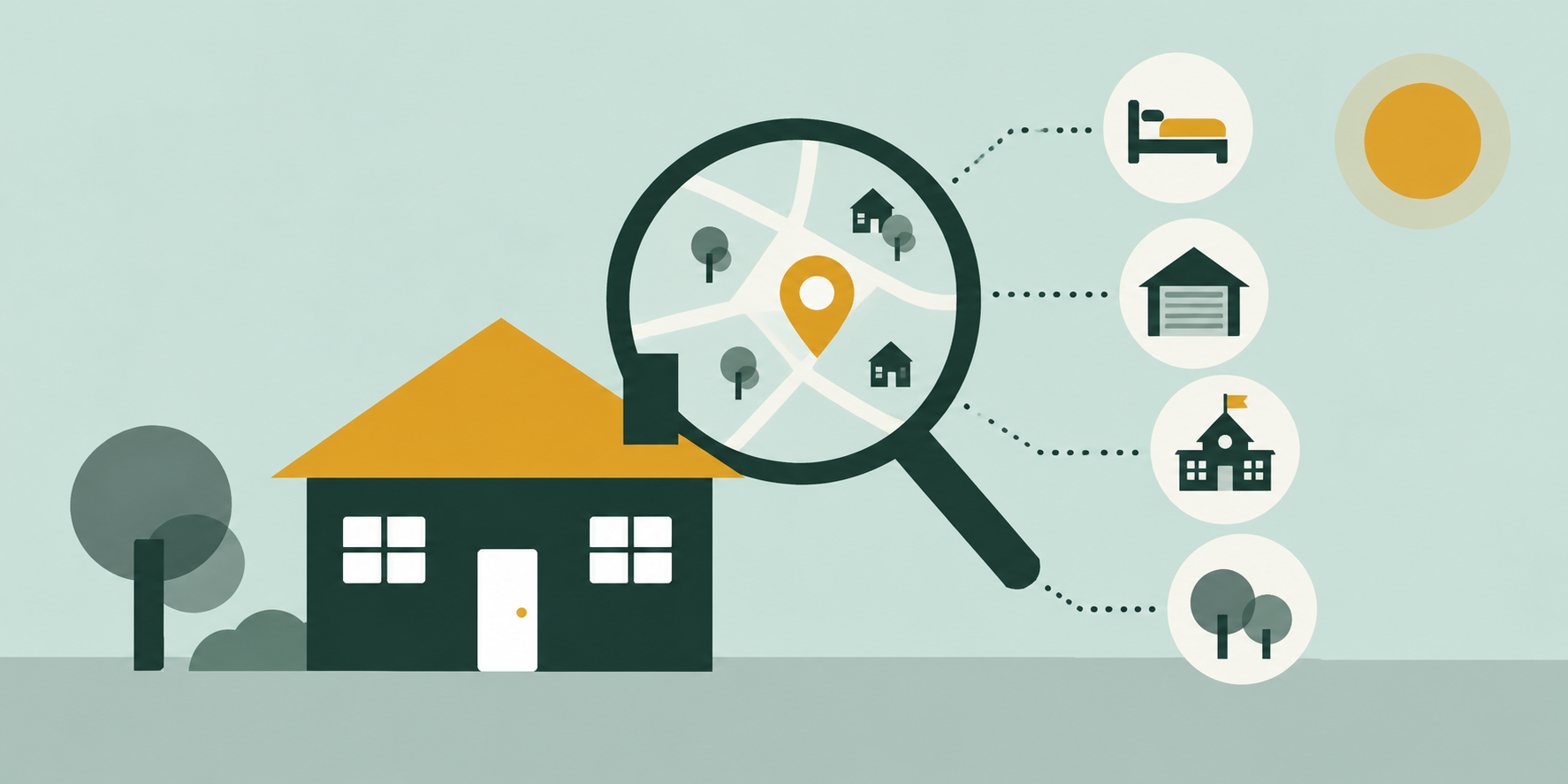
Make a short list before you start browsing, or every house will look equally tempting.
Needs: the number of bedrooms and bathrooms, the commute, the budget, accessibility.
Wants: a garage, a yard, a renovated kitchen, a particular school district.
Deal-breakers: busy roads, flood zones, a long drive to work or family.
Then look closely at the area. Check commute times at rush hour, nearby services, noise, crime statistics, planned developments and the school ratings if they matter to you. Search the address on FEMA's flood map service, because flood zones affect insurance costs and sometimes lender requirements.
9. Understand the full monthly cost
The mortgage payment is only part of the cost. Add up the whole picture, often called PITI plus extras:
Principal and interest on the loan.
Property taxes, which vary a lot by state and county, and may be reassessed after you buy.
Homeowners insurance, which can differ greatly by region, so get quotes before you make an offer. Flood, earthquake and some wind coverage are often separate.
Mortgage insurance, if you put down less than 20 percent on a conventional loan, or on FHA loans.
HOA fees, if the property has them, and ask about any special assessments.
Utilities and maintenance.
Ask the listing agent for the previous year's utility bills and tax bill, and check whether the taxes could change after the sale.
10. Find a buyer's agent, and understand how they're paid
A good buyer's agent knows the local market, helps you write competitive offers and guides you through the process.
Interview two or three. Ask about their experience with first-time buyers, their local knowledge and how they communicate.
Expect a written agreement. Since the 2024 rule changes following the National Association of Realtors settlement, buyers in most cases sign a written agreement with their agent before touring homes. It sets out the services and how the agent is paid.
Ask about compensation. Fees are negotiable, and the terms in the agreement matter. Make sure you understand what you'll owe and who pays it before you sign.
Read what you sign, and ask about how and when you can end the agreement.
11. Learn what goes into an offer
An offer is more than a price. Understanding the parts helps you make a strong one without taking on risks you don't understand.
Price, guided by recent comparable sales that your agent will pull.
Earnest money, which shows you're serious.
Contingencies, which are conditions that let you back out or renegotiate, usually for the inspection, the financing and the appraisal. Waiving them can make an offer stronger, but it exposes you to real risk.
Closing date and what's included in the sale, such as appliances.
Seller concessions, where the seller pays part of your closing costs.
Tip: In a hot market, decide in advance the most you're willing to pay, and don't go beyond it in the heat of a bidding war.
12. Know what happens after the offer is accepted
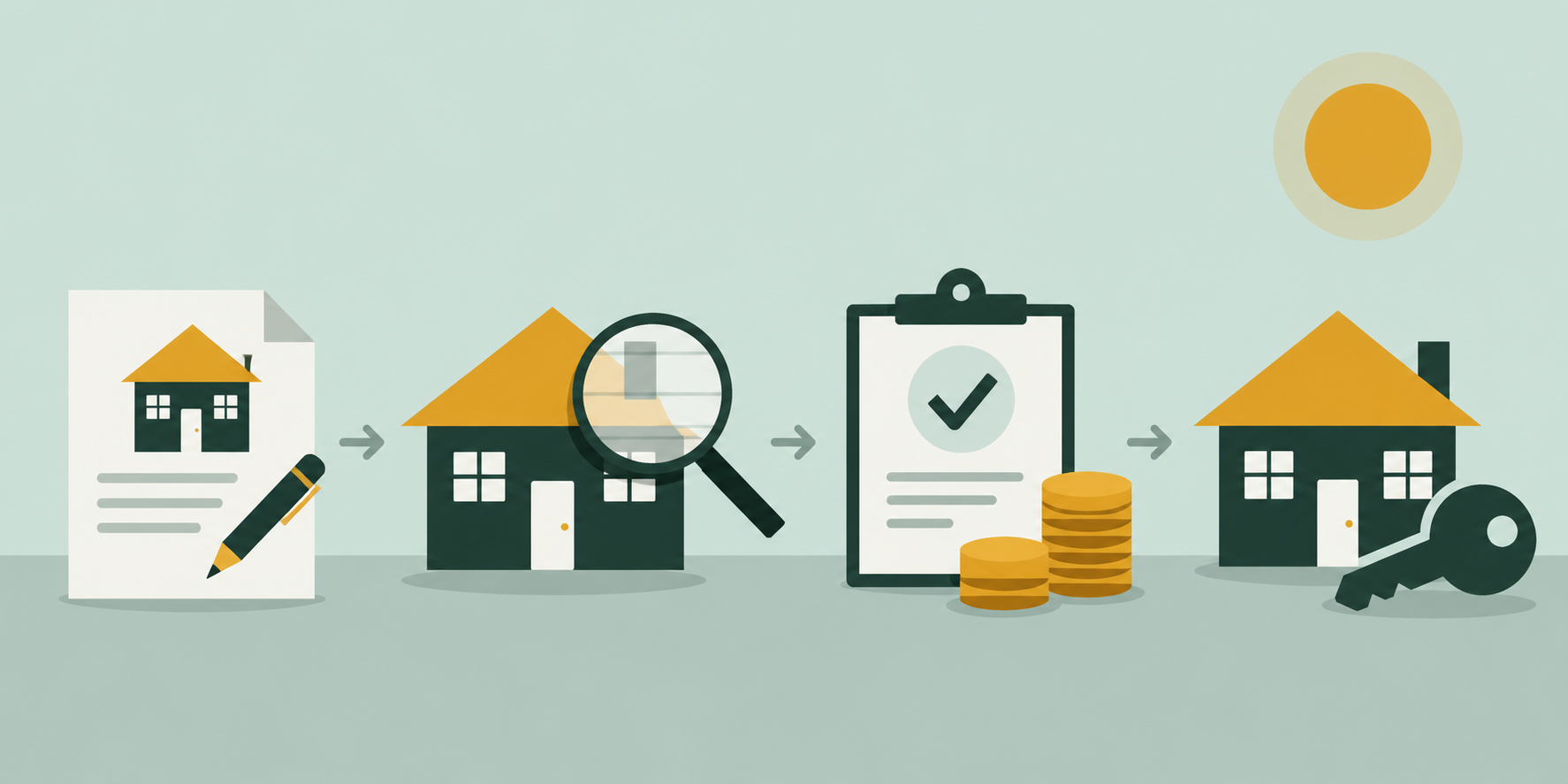
Knowing the steps makes the weeks after the offer less stressful.
Earnest money goes into escrow.
The home inspection. Hire a licensed inspector, attend if you can, and decide what to ask the seller to repair or credit. Our checklist for what to look for on viewing day helps you spot issues before this step.
The appraisal, which the lender orders to confirm the home is worth what you're paying. If it comes in low, you may need to renegotiate or bring more cash.
Underwriting. The lender verifies everything, and may ask for more documents. Respond quickly.
Title search and insurance, which check that the seller can legally transfer the property.
Homeowners insurance. Your lender will require proof of coverage before closing.
The Closing Disclosure. Lenders must give you this at least three business days before closing. Compare it with your Loan Estimate and ask about anything that changed.
The final walkthrough, shortly before closing, to confirm the condition and that agreed repairs were done.
Closing, where you sign, pay and get the keys.
Until closing, avoid opening new credit, making big purchases, changing jobs or moving money around, since lenders often re-check your situation just before closing.
Common mistakes to avoid
Shopping for houses before you've been pre-approved.
Buying at the top of your approval. Leave room in your budget for life.
Using every dollar for the down payment, with nothing left for repairs.
Skipping the inspection or waiving contingencies without understanding the risk.
Forgetting insurance, taxes and HOA fees when you work out the monthly cost.
Taking on new debt before closing, which can derail the loan.
Not asking questions. A good agent and lender will explain anything, and it's your money.
Frequently asked questions
How far in advance should I start preparing? Ideally three to six months before you want to buy, longer if you need to improve your credit or save more.
Is it better to rent or buy? It depends on how long you'll stay, local prices and rents, and your finances. Buying generally makes more sense if you'll stay for several years, since transaction costs are high.
How much should I keep in savings after buying? Many advisers suggest several months of expenses, but it depends on your job stability and other debts.
Can I buy with a low credit score? Sometimes. FHA loans accept lower scores than many conventional loans, but a lower score usually means a higher rate and more cost.
Should I choose the lowest rate? Not automatically. Compare the total cost, including fees and points, and check the Loan Estimate for each lender.
The quick checklist
Work out a comfortable monthly budget, not just the lender's maximum.
Check your credit reports and fix errors.
Pay down debts and gather your documents.
Save for the down payment, closing costs and a cushion.
Get pre-approved by two or three lenders and compare Loan Estimates.
Choose a loan type and rate type.
Look into first-time buyer assistance in your state.
Write down your needs, wants and deal-breakers, and research the area.
Add up the full monthly cost, including insurance, taxes and HOA fees.
Choose a buyer's agent and read the agreement.
Learn what goes into an offer, including contingencies.
Know the steps from accepted offer to closing.
Sources and further reading
Rules and programs change, so confirm current details with a lender and the official sources below.
Consumer Financial Protection Bureau: consumerfinance.gov (home buying guides, Loan Estimate and Closing Disclosure)
AnnualCreditReport.com (free credit reports)
US Department of Housing and Urban Development: hud.gov (FHA loans and housing counseling)
US Department of Veterans Affairs: va.gov (VA home loans)
USDA Rural Development: rd.usda.gov (USDA loans)
FEMA Flood Map Service Center: msc.fema.gov
Your state housing finance agency, for down payment assistance
Note: This article is general information, not financial, legal or tax advice. Loan terms, fees and programs vary by lender and state and change over time. Speak to a licensed mortgage professional and a real estate attorney or agent about your situation.
Keep reading
What to look for on a house viewing: a 15-minute checklist
A 15-minute viewing-day routine for US home buyers: what to check, what to ask the seller, and the red flags that staging can hide.
How much down payment do you really need to buy a house in the US?
You don't need 20 percent down. Compare conventional, FHA, VA and USDA down payments, what each costs, and how to choose the right one.
BuyingFixed or variable? How to choose your mortgage rate
The trade between certainty and flexibility.